December 2025. Written for City in Literature and Film class
“The inner aspect of this outer reserve is not only indifference but, more often than we are aware, it is a slight aversion, a mutual strangeness and repulsion, which will break into hatred and fight at the moment of a closer contact, however caused”
-Georg Simmel “The Metropolis and Mental Life” (57)
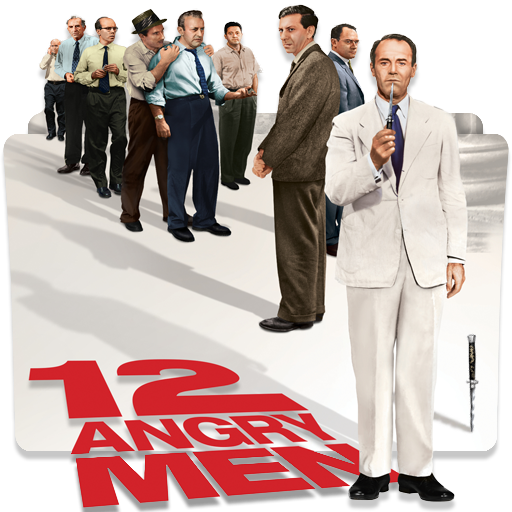
Even when set in the city, a duality exists between representations of juries in courtroom films. On one hand, juries are depicted as silent and spiritually cohesive entities. In a collective procession, they flow in and out of the courtroom. Otherwise, they attentively and silently listen. Meanwhile, the less frequent jury-centered film points to the Simmel quote that commences the essay; conflict, personal motive, and prejudice emerge. The city as a backdrop for these asks us to examine the way citygoers interact with each other and their institutions. The city is both seen as the forebringer of reason and cold objectivity, but also a diversity of population, quickness, and individuality. How do the juries disrupt the modernist trappings and regularly act as the sole deliverers of justice, despite city conditions? To explore these questions, we will foreground 12 Angry Men (1957) and The Verdict (1982), both directed by Sidney Lumet, prolific in both city-set and legal films. Despite their different levels of jury foregrounding, 12 Angry Men – the most celebrated jury deliberation film – and The Verdict each give equal weight to their importance. Ultimately, these texts typify the citygoer as a bridge between the city’s exterior of stimuli and interior of bored objectivity, creating empathetic and dialectical spaces propelled by metropolitan life.
Why does Sidney Lumet so often center the city? Why is the setting particularly apt for his legal films? Lumet’s work is entwined with the city, and the setting is essential for understanding his influences and his films. In “Street Smart,” Richard Blake highlights characteristics of Lumet’s style and narrative: “His particular brand of film-making grew out of the New York experience, which for him was a combination of autobiography, legitimate theater, and television… For him, the drama grew in intensity when it became compressed into the confined spaces and limited mobility of the live stage” (Blake 47). Additionally, his characters often exist apart from institutions, as he himself distanced himself from Hollywood and had an independent approach. Likewise, the claustrophobia and close encounters directly contribute to the social dilemmas present in Lumet’s oeuvre. They offer moments where inhabitants in the individualized city must interact, the sort of interactions Simmel asserts will lead to “hatred and fight.” For Lumet, these moments of conflict, where the impersonal city becomes discordant, are vital stories to explore.
Evidently, the courtroom setting, which both through the trial and the jury, is an ideal setup for the tensions Lumet hopes to explore. Matthias Kuzina gives his definition for the legal film: “The dialectical approach to judicial questions and the theatricality inherent in the gradual resolution of the conflict can be regarded as minimum requirements for the classification of legal narratives, besides the locale of the courtroom” (Kuzina 80). Again, ‘theatricality’ is a reference for these films, both as a location for forced interaction and claustrophobia and spaces for dialogue around social questions. The formal aspects of the courtroom film foster tension and dialogue for the impersonal citygoer. Thus, there is a clear throughline between Simmel, Lumet, and the legal film.
For Lumet, the jury becomes a contrast to the cultural discontinuity of modernism. Ben Singer argues modern society has killed the sense of community in society: “The destruction of communal feeling may have stemmed from capitalism in general but, as many social critics stressed, it was exacerbated by the anonymity and impersonality of urban society” (Singer 33). Much like city residents, the jury is portrayed as an anonymous body. 12 Angry Men may seem to complicate this, but the film is still bathed in anonymity – we only learn two of the jurors' names. So, it may seem that when the jury is an invisible and anonymous body, it undermines their power within the courtroom film and their disruption of the city. In an overview of the cinematic jury, Ross Levi explains the largely anonymous depictions: “The complete anonymity with which the jurors are portrayed in the vast majority of cinematic cases helps perpetuate the idea that the jury is so neutral and fair that it is almost invisible” (Levi 69). Although they are often sidelined, there is a confidence in their silence, a confidence assumed by their shared goal and higher moral position of upholding justice. The nearly religious formation of the jury (why are there 12?) creates a shared experience and goal, a collective revolving around a commonly shared decision. The duality of jury depiction – invisible versus focal point – both point to a moral continuity and moral discourse that the workings of a city do not often nurture or promote but is found in the moral position afforded in a trial.
Nonetheless, the nature of crowds and groups in the city makes the deviation from a collective more daunting. In his analysis of Lumet's filmography, Jay Boyer pays close attention to the visual patterns that establish relationships between the individual jurors and the group, arguing that they establish group pressure, isolating figures against others “visually separated by the group” in 12 Angry Men (Boyer 4). Boyer goes on to present several patterns established in the film to which build individual/group dynamics. It becomes a striking exercise in that it illustrates a desire to remain part of a group while being confronted with institutional and epistemological debate. The construction becomes a modernized offshoot of the vigilante mob, standard in the Western. The jurors take matters into their own hands. The casting of Fonda invokes his Western roles, such as The Ox-Bow Incident, where he is again a voice of reason against a group. But unlike the vigilante mob, the jurors can’t help but be confronted and separated from the group as the conversation continues, pointing to an ontological truth of human identity and interaction within these confined city spaces. Despite a metropolitan mindset, they are forced to reevaluate the comfort and anonymity of the crowd.
If we push these visual patterns further, the camerawork has a double function, taking up the visual patterns codified in the lawyer-centered courtroom film. In the last third of 12 Angry Men, two pairs of jurors begin to stand out as they come to resemble a prosecution and a defense team. As the pairs pass arguments back and forth, reverse two-shots are utilized, a framing technique synonymous with the portrayal of lawyers in film (Fig. 1 and 2). Additionally, the visual pattern of a judicial figure is present in a juror who breaks the flow of argument to question the relevancy (Fig. 3). The jurors recreate their own courtroom, both in content and formally. Still, we are reminded of the less standardized and formatted structure, with occasional remarks from other jurors breaking into the debate. The adaptable argumentation offers an intermediary between strict court procedures and an egalitarian system. The men’s impromptu trial castigates the legal system, marking it as ineffective and unreliable. Additionally, this makeshift subsystem points to the enormity of the city, collapsing in on itself, forcing its own inhabitants to remake and fight for the overlooked citizen. Ultimately, the jury offers a voice for the voiceless – we don’t hear the wronged individual speak in either film.
The trial separates the jury and the audience from the everyday, asking them to confront the events in a critical environment. To compare to the nature of the jury in film, James Zborowski points to Brecht’s conception of the ‘street scene,’ in which spectators don’t see an accident, but rather have it described and reconstructed for them, creating a critical social distance (Zborowski 56). In 12 Angry Men, the jurors themselves reconstruct events presented in the trial, placing themselves as key witnesses, the murder victim, and the defendant. Characters pretend to walk like an old man and even hold a knife like the accused would. To achieve this, they must step out of their individuality and identify with another subject, separating themselves from the narrowness of apathy. Put another way, the critical and empathetic position the jurors are put in contrasts the empirical of the city life. Similarly, the audience is on a similar level as the jurors, reconstructing events, and at another degree judging the jurors themselves one step removed. The jury film becomes a space of critical reflection for moral issues of injustice, racism, and corruption as well as the failings of the court. These fixtures of the city begin to fragment.
The scale of the city results in institutions sectioning off from themselves, creating substructures which resemble their own separate municipalities. In The Verdict, the courtroom building is a city within itself. Stone pathways and the flow of passerbys mirror pedestrians navigating on sidewalks. There is a newsstand inside, marking classic iconography of the public city space. We see many characters navigate these buildings and never leave or exist outside of it. In the film, the scale of the courthouse, as well as other institutions like the hospital and Catholic diocese, demonstrates the extent of their systems and inner workings. They offer a more “clean” and “pure” space separate from the public city space, one that can be more fully controlled. Moreover, the spaces become confining and strict. Then, how can these structures be truly invested when they are so enormous that they partition themselves away from the city? The foreign entity of the jury comes to perforate the uniformity and protection of these daunting interiors.
Each film establishes a division between interior and exterior spaces, with those willing to traverse both spaces depicted as humanist. In The Verdict, Paul Newman’s character desperately searches the city for his witnesses, who are missing or unhelpful. The summation of lengths Newman will go, both literally and figuratively, is when he travels from Boston to New York to compel a key witness. Meanwhile, the film’s institutional figures live almost self-sufficiently in their buildings. The assured and unmoving institutions of the courtroom, hospital, and church – each a city in its own right – contrast Paul Newman’s interaction with the secretive exterior spaces of the city. Newman’s character, like the jury, disrupts a strong interior/exterior barrier through his outsider qualities, literally leaving the city-like structures of the hospital and courtroom building, and the city itself. The way the outer spaces are depicted affirms the jury as part of the rapidly paced and sprawled city, yet the true moral work rests on them.
The culmination of interior/exterior is also found in the character of Juror 8 (Henry Fonda) in 12 Angry Men. The outer city constantly obstructs information. The movement and sound of the L train complicate testimony which relies on audio and visual information. Contrastly, the judge at the beginning of the film is bored and monotone. In the jury room, a large window overlooks the city skyline, but we aren’t afforded the ability to see it. Doubly, we don’t see many of the jurors look out either, with the exception being Juror 8. His occupation, which is revealed to be an architect, is key here. His architecture skills seem to give him an advantage in seeing the underlying structures, literal and figurative, of the city, culminating in his defense against the young man on trial. Throughout the deliberations, the skyline becomes a point for him to return and to reflect on, as if it's a Brechtian stage. His relationship to the city, both as a citygoer and someone who has a deeper understanding of the buildings, evidently make him the most critical and clearseeing of the jurors.
But not all of the jurors are as clearseeing. They are often being extremely emotional and subjective, putting depictions of citygoers as objective into question. Ross Levi sees the jury as purely dispassionate: “It certainly allows the jury to retain its mystique as a perfectly neutral decision-making body that shall not be swayed by emotion” (Levi 68). Levi sticks to this idea, yet, he fails to recognize the many ways The Verdict and 12 Angry Men fundamentally disrupt this. Through a legal precedent loophole, the key testimony of a nurse in The Verdict is told to be ignored and disregarded. Without this testimony, there is no evidence for Newman’s case, legally speaking. But that’s only if the jury adheres to the court’s rules, which they do not. Newman delivers a speech in which he posits to the jury, “You are the law.” The moment is cathartic in the appeal to emotions and its contrast to the objective and apathetic approaches of the judge and defendants. Why would the average city person dwell in precedent and legal loopholes? It points to the film’s truth: the city dweller can observe the proceedings of a flawed court and still come to the just conclusion. They can place emotion above objective rule. Additionally, the very fact that the jury will soon be back to daily life (like the audience) disconnects them from the rules and standards of the space.
The ephemerality of the jury is what sets it apart from the perennial happenings of the city. At the end of 12 Angry Men, the camera pans over the table by which the jurors deliberated. It’s scattered with the ephemeral remnants of their existence: newspaper, cigarettes, and scribbled notes. A fade connects these items with a shot of the jurors leaving the courtroom and dispersing into the city, away from their brief moral exploration, and the film affords us the only clear image of the city: the jurors disperse back into the everyday. The association marks the jury as an entity which is provisional as the ephemera they’ve produced. The everyday and temporary nature of the jury structure informs their perspectives, their decisions, and their long-term investment in the case. Their “hatred and fight,” as Simmel puts it, is what allows them to complicate the tedium and indifference marked in the judge at the beginning of the film, but also a repetition of their lives in the city, a location often defined as being constantly in flux.
When foregrounded, the city becomes a crux on which to understand the courtroom film. As opposed to rural depictions of the courtroom and jury, which often feature reactionary and uniform with previously acquainted jurors, the city jury disrupts the unreasonable objectivity of the looming court, instead placing power in the ordinary, anonymous citizen. In these films, there is a sentiment that the collective – made up of disparate perspectives and experiences – can perturb hardened structures, whether through loud and angry deliberation, or quiet but assured observation. The exact criticisms of the city mentality seem to revise into advantages: temporality, discontinuity, doubt, and anonymity. Ultimately, these films posit a hope that moral continuity is possible in the apathy and individuality of the city, even for a brief time.
Blake, Richard A. “Lower East Side: Sidney Lumet.” Street Smart, University Press of Kentucky, 2005.
Boyer, Jay. Sidney Lumet. Twayne Publishers, 1993.
Kuzina, Matthias. “The Social Issue Courtroom Drama as an Expression of American Popular Culture.” Journal of Law and Society, vol. 28, no. 1, 2001, pp. 79–96.
Levi, Ross D. “Trial of One’s Peers: The Jury.” The Celluloid Courtroom, Bloomsbury Publishing USA, 2005.
Simmel, Georg. “The Metropolis and Mental Life.” The Blackwell City Reader, edited by Gary Bridge and Sophie Watson, 2002.
Singer, Ben. Melodrama and Modernity: Early Sensational Cinema and Its Contexts. Columbia University Press, 2001.
Zborowski, James. “Distance, Representation and Criticism.” Classical Hollywood Cinema: Point of View and Communication, Manchester University Press, 2016, pp. 44–84.